 Ohne Anstehen buchbar
 Besuch des Palais des Papes während des Festival d'Avignon
Wie das weltweit größte Festival der darstellenden Künste den Palast im Juli neu gestaltet – was geöffnet bleibt, was eingeschränkt ist und ob Sie während des Festivals oder lieber im September kommen sollten.
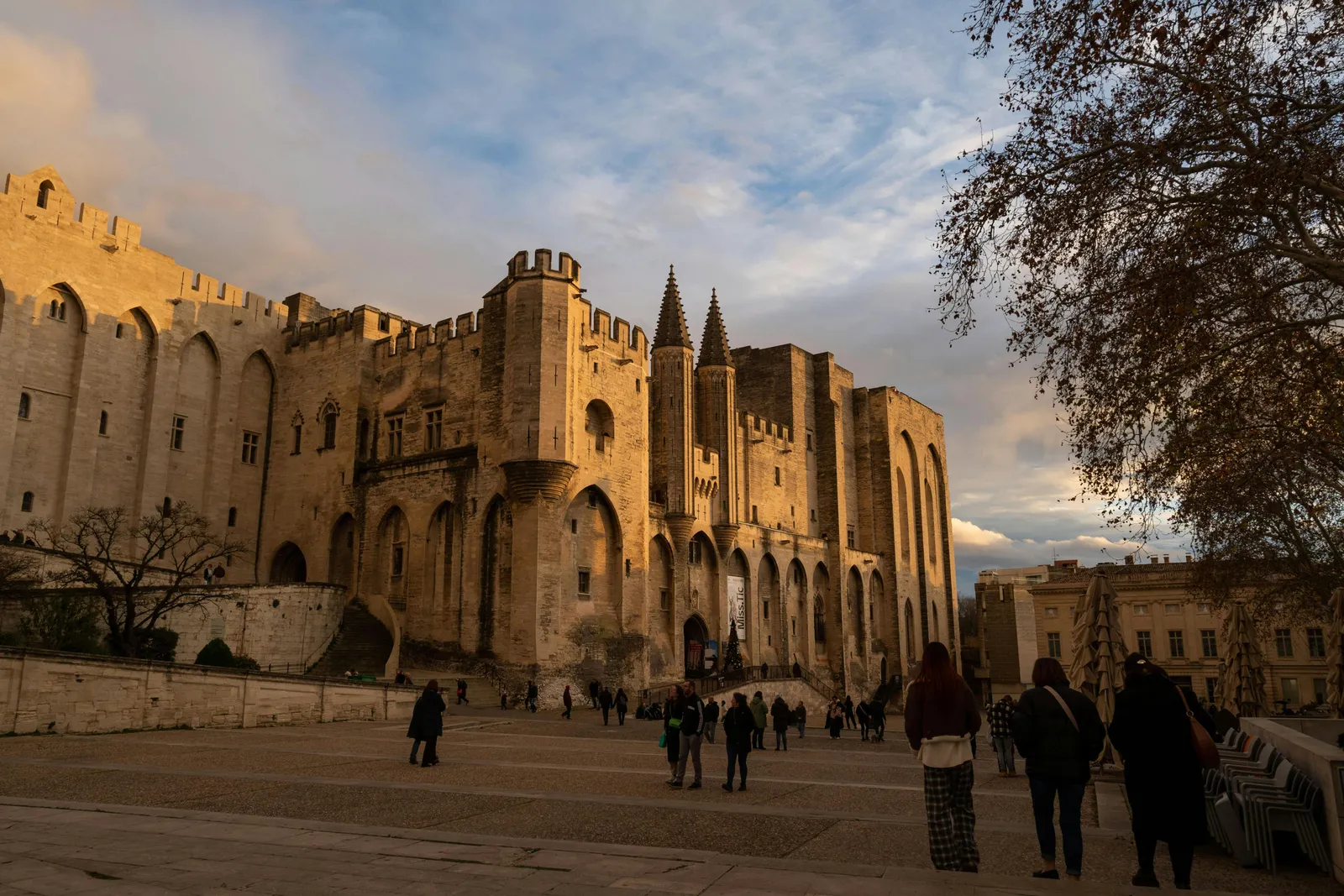
Drei Wochen lang, jeden Juli, wird der Palais des Papes zum Hauptquartier des größten Festivals der darstellenden Künste der Welt. Das Festival d'Avignon, 1947 vom Schauspieler und Regisseur Jean Vilar gegründet, zeigt seine Flaggschiff-Inszenierungen im Cour d'Honneur – dem großen Innenhof zwischen Altem und Neuem Palast – unter freiem provenzalischen Himmel. Ein paralleles Programm, das Festival OFF, füllt über tausend unabhängige Spielstätten in der ummauerten Altstadt mit experimentellem Theater, Tanz, Musik und Performance-Kunst. Zusammen verdreifachen sie die Einwohnerzahl der Altstadt von Avignon, verdoppeln die Unterkunftspreise und sättigen jede Café-Terrasse der Stadt. Für Besucher, deren Hauptinteresse dem Palast als päpstlichem Monument des 14. Jahrhunderts gilt, ist das Festival eine Komplikation; für Besucher, die ein großes Theatererlebnis mit einem Kulturerbe-Besuch verbinden möchten, ist es einer der großartigsten kombinierten kulturellen Anlässe Europas. Dieser Führer erläutert die praktische Realität, damit Sie entscheiden können, auf welcher Seite dieses Abwägens Sie stehen.
Was das Festival ist und wie es begann
Das Festival d'Avignon wurde 1947 von Jean Vilar auf Einladung des Dichters René Char gegründet, mit dem erklärten Ziel, anspruchsvolles Theater einem Publikum außerhalb von Paris zugänglich zu machen. Die erste Ausgabe bestand aus einer einzigen Inszenierung von Shakespeares Richard II., aufgeführt im Cour d'Honneur des Palais des Papes. Die Wahl des Ortes war bewusst: Die mittelalterlichen gotischen Fassaden des Innenhofs, der offene Himmel und die natürliche Akustik schufen ein Theatererlebnis, wie es in konventionellen Spielstätten nicht möglich war. Vilar leitete das Festival bis zu seinem Tod im Jahr 1971, und die von ihm gegründete Institution wuchs zum kuratierten IN-Programm heran, das bis heute unter der künstlerischen Leitung eines rotierenden, vom französischen Staat ernannten Direktors läuft.
Das IN-Festival ist das offizielle, kuratierte Programm mit rund vierzig vom künstlerischen Leiter ausgewählten Produktionen, die im Cour d'Honneur und einer kleinen Anzahl weiterer erstklassiger Spielstätten in der ganzen Stadt aufgeführt werden. Das OFF-Festival hingegen ist ein völlig eigenständiges Phänomen: ein selbstorganisiertes Fringe-Programm mit über tausend Produktionen in Cafés, Kirchen, Schulen, Innenhöfen und umgebauten Lagerhäusern in der Altstadt, ohne zentrale Kuratierung. Das IN ist das institutionelle Flaggschiff; das OFF ist das kulturelle Ökosystem. Festivalbesucher stellen sich in der Regel ein persönliches Programm aus zwei oder drei IN-Produktionen und einem halben Dutzend OFF-Shows über ein langes Wochenende oder eine ganze Woche zusammen.
Was im Juli mit dem Cour d'Honneur geschieht
Der Cour d'Honneur wird für das Festival physisch verwandelt. Ab Ende Juni wird der Innenhof für mehrere Tage für den Bühnenbau geschlossen: Eine ansteigende Tribüne für rund zweitausend Zuschauer wird an der Fassade des Palais Neuf errichtet, Beleuchtungstraversen und Tonanlagen werden installiert, und am gegenüberliegenden Ende wird eine tiefe Bühne aufgebaut. Vom Festivalbeginn Anfang Juli bis zu seinem Abschluss Ende Juli wird der Innenhof aktiv für Produktionen genutzt: Er dient als Hauptspielstätte des IN mit täglichen Vorstellungen vom späten Nachmittag bis in die Nacht und technischen Proben während des Tages.
Für Palastmuseum-Besucher ist der Innenhof in dieser Zeit je nach Tageszeit teilweise oder vollständig nicht zugänglich. Morgendliche Besuchszeiten erlauben manchmal einen kurzen Blick in den Hof zwischen den Proben; nachmittägliche Slots finden den Hof in der Regel ab etwa zwei Uhr für den Museumsverkehr geschlossen vor; abendliche Slots nach Vorstellungsbeginn sind nicht möglich. Der Standardrundgang wird um den geschlossenen Innenhof herumgeführt, sodass der Rest des Palastes – Grand Tinel, Consistory, Giovannetti-Kapellen, Chambre du Cerf, Terrasse, Pontifical Gardens – weiterhin zugänglich bleibt. Die HistoPad-Rekonstruktionen des Cour d'Honneur gleichen die sichtbare Beeinträchtigung teilweise durch Augmented-Reality-Ansichten des ursprünglichen mittelalterlichen Raums aus.
Besuch des Palastmuseums während des Festivals
Wenn Sie den Palast während des Festivals besuchen möchten, priorisieren Sie ein frühes Zeitfenster am Morgen – idealerweise den ersten Slot des Tages, in der Regel von neun bis halb zehn. Zu dieser Stunde ist der Cour d'Honneur am besten zugänglich (technische Proben beginnen meist am späten Vormittag), die Touristendichte ist am geringsten, und Sie beenden den standardmäßigen zweieinhalbstündigen Rundgang vor dem Mittagessen, mit dem Rest des Tages zur freien Verfügung. Eine Vorabbuchung ist während des Festivals wichtiger als zu jeder anderen Jahreszeit: Tickets ohne Voranmeldung sind regelmäßig bis zum späten Vormittag ausverkauft, und der Druck auf Unterkünfte ist enorm.
Späte Nachmittags- und Abend-Slots im Palast während des Festivals sollten vermieden werden. Ab zwei Uhr ist der Innenhof in der Regel für die Vorbereitung der Aufführungen geschlossen, der Besucherrundgang ist am stärksten frequentiert, und die Stadt draußen ist heiß und von Festivalbesuchern überlaufen. Besucher, die sowohl einen substanziellen Palastbesuch als auch Festivalatmosphäre wünschen, sollten das Erlebnis auf zwei Tage aufteilen: Palastmuseum am Morgen des ersten Tages, eine abendliche IN-Vorstellung im Innenhof am zweiten Tag mit einem eher oberflächlichen Nachmittagsbesuch. Dies ist das Muster, das die meisten kulturbewussten Festivalbesucher nach ihrer ersten Ausgabe wählen.
Praktische Realitäten: Unterkunft, Restaurants, Züge
Der Festivaldruck auf die Infrastruktur von Avignon ist enorm. Die Unterkunftspreise in der ummauerten Altstadt verdoppeln sich für die Dauer des Festivals ungefähr, mit Spitzenpreisen an den IN-Eröffnungs- und Abschlusswochenenden. Hotels und Pensionen innerhalb der Mauern sind für die begehrtesten Nächte vier bis sechs Monate im Voraus ausgebucht; Service-Apartments, Airbnb-ähnliche Unterkünfte und Hotels außerhalb der Mauern im Stadtteil Villeneuve-lez-Avignon jenseits der Rhône sind noch verfügbar. Restaurants erfordern Reservierungen mindestens mehrere Tage im Voraus, und die beliebten Tische in der Altstadt – insbesondere solche mit Terrassen auf der Place de l'Horloge oder der Place Crillon – können eine Woche oder länger Vorlaufzeit benötigen.
Die Bahnkapazität ist ähnlich angespannt. Der Bahnhof Avignon TGV und der Bahnhof Avignon Centre bewältigen während des Festivals gemeinsam das Drei- bis Vierfache ihres Nebensaison-Passagieraufkommens. Die SNCF setzt im Juli zusätzliche Züge auf der Strecke Paris-Marseille ein, um die Nachfrage aufzufangen, aber die Züge sind ausgebucht, und die TGV-Tarife ohne Vorabbuchung können sich verdreifachen. Eine Buchung mindestens zwei bis drei Wochen im Voraus ist für Festivalreisen unerlässlich. Besucher, die während des Festivals einen Tagesausflug von Marseille oder Lyon planen, sollten die früheste Morgenabfahrt und einen reservierten Rückfahrtsitz priorisieren. Autofahrer müssen mit der üblichen A7-Staus im Sommer plus Festivalverkehr rechnen; die Parkplätze am Stadtrand füllen sich früher am Tag als in der Nebensaison.
Sollten Sie während des Festivals reisen oder es meiden?
Besuchen Sie Avignon während des Festivals, wenn darstellende Künste zu Ihrem Reisegrund gehören. Das IN-Programm im Cour d'Honneur ist ein wirklich einzigartiges Kulturerlebnis: ernsthaftes Theater, Tanz und Musik in einem mittelalterlichen Papstpalast unter provenzalischem Himmel, mit Traditionen, die bis 1947 zurückreichen. Viele Produktionen sind englisch untertitelt, und große internationale Ensembles wirken regelmäßig mit. Das OFF-Festival verleiht der Stadt eine kulturelle Energie, die sie zu keiner anderen Jahreszeit entfaltet. Kombinieren Sie einen Festivalabend mit einem Palastbesuch am Vormittag – und Sie erleben eine der stärksten Verbindungen von Kulturerbe und Bühnenkunst, die Europa zu bieten hat.
Meiden Sie das Festival, wenn Ihr Hauptinteresse dem Palast als historischem Monument des 14. Jahrhunderts gilt, wenn Sie ruhige, besinnliche Besuche bevorzugen, wenn Ihr Budget empfindlich auf Unterkunftszuschläge reagiert oder wenn Sie mit Kleinkindern reisen, die unter Hitze und Gedränge leiden. Mai, Juni, September und Anfang Oktober bieten das Palasterlebnis ohne Festivalüberlagerung – zu geringeren Kosten, mit leichterer Unterkunftssuche und kürzeren Wartezeiten. Es gibt keine falsche Entscheidung: Das Festival und ein ruhiger Palastbesuch in der Nebensaison sind einfach unterschiedliche Reisen mit unterschiedlichen Vorzügen. Der Fehler, den es zu vermeiden gilt, ist, Mitte Juli in Erwartung eines Nebensaison-Erlebnisses anzureisen.
Häufig gestellte Fragen
Wann genau findet das Festival d'Avignon statt?
Rund drei Wochen von Anfang bis Ende Juli eines jeden Jahres. Die genauen Termine werden vom Festivalverband im März oder April für den jeweiligen Sommer bekannt gegeben. Das IN-Programm läuft die vollen drei Wochen; das OFF-Programm überschneidet sich, erstreckt sich jedoch an beiden Enden etwas länger.
Ist der Palast während des Festivals als Museum geöffnet?
Ja. Der reguläre Besucherrundgang ist während des gesamten Festivals geöffnet, der HistoPad ist verfügbar, und der Vorrangseintritt ohne Anstehen funktioniert weiterhin. Lediglich der Cour d'Honneur ist eingeschränkt, der Rest des Palastes bleibt zugänglich.
Kann ich während des Festivals eine Aufführung im Cour d'Honneur sehen?
Ja, wenn Sie IN-Festivaltickets zum Zeitpunkt des Vorverkaufs buchen. Das Cour-d'Honneur-Programm ist das Flaggschiff des IN, mit Produktionen, die in der Regel zwei bis fünf Nächte laufen. Tickets für beliebte Produktionen sind innerhalb weniger Stunden nach Veröffentlichung Ende April ausverkauft.
Wie unterscheiden sich IN-Festivaltickets von OFF-Festivaltickets?
IN-Tickets werden zentral vom Festival d'Avignon über dessen offizielle Website verkauft. OFF-Tickets werden einzeln von jeder unabhängigen Produktion verkauft, in der Regel über eine zentrale OFF-Plattform oder an der Abendkasse des Veranstaltungsorts. Das IN ist kuratiert und preisgestaffelt; das OFF ist offen zugänglich und preisvariabel.
Was ist der Unterschied zwischen IN und OFF?
Das IN ist das offizielle kuratierte Programm mit rund vierzig Produktionen, die vom künstlerischen Leiter des Festivals ausgewählt und in erstklassigen Spielstätten wie dem Cour d'Honneur aufgeführt werden. Das OFF ist ein völlig separates, selbstorganisiertes Fringe-Festival mit über tausend Produktionen in der gesamten Altstadt, ohne zentrale Kuratierung.
Gibt mein Palast-Ticket Zugang zu den Festival-Aufführungen?
Nein. Das Museumsticket für den Palast und die Eintrittskarten für das Festival sind zwei völlig getrennte Produkte verschiedener Organisationen. Der Palais des Papes wird vom Palais des Papes betrieben; das Festival d'Avignon ist eine eigenständige Kultureinrichtung.
Kann ich die Brücke während des Festivals trotzdem besichtigen?
Ja. Der Pont Saint-Bénézet ist vom Festival nicht betroffen und folgt seinem normalen Betriebsplan. Das Kombi-Ticket, das sowohl den Palast als auch die Brücke abdeckt, ist den gesamten Juli über erhältlich.
Sollte ich während des Festivals eine Unterkunft in Avignon oder außerhalb der Stadtmauern buchen?
Innerhalb der Mauern ist es stimmungsvoller und praktischer für abendliche Festival-Aufführungen, aber die Preise sind am höchsten und die Verfügbarkeit am knappsten. Villeneuve-lez-Avignon jenseits der Rhône bietet mehr Verfügbarkeit und niedrigere Preise mit einer kurzen Shuttle- oder Taxifahrt ins Zentrum. Beides ist möglich; die Wahl hängt von Budget und Bequemlichkeit ab.
Lohnt sich ein Besuch in Avignon im Juli, wenn mir das Festival egal ist?
Ehrlich gesagt, nicht wirklich. Hitze, Menschenmassen, Unterkunftszuschläge und teilweise Einschränkungen im Cour d'Honneur führen zu einem weniger lohnenden Palastbesuch als im Mai, Juni oder September. Wenn Ihre Reisedaten flexibel sind und Ihr Interesse dem Palast selbst gilt, wählen Sie einen der Übergangsmonate.
Wie früh kommen die IN-Festivaltickets in den Verkauf?
Das vollständige IN-Programm wird in der Regel Ende März oder Anfang April bekannt gegeben, und die Tickets gehen kurz danach in den Verkauf. Die begehrtesten Produktionen im Cour d'Honneur sind innerhalb weniger Stunden ausverkauft. Die Festival-Website veröffentlicht jedes Jahr das genaue Verkaufsstartdatum.