 Acceso sin colas disponible
 La Mejor Época para Visitar el Palais des Papes en Aviñón
Una guía mensual especializada sobre afluencia, clima, vientos del mistral y cómo el Festival d'Avignon en julio transforma el acceso a la Cour d'Honneur.
El Palais des Papes abre todo el año, pero la experiencia de la visita varía notablemente de una estación a otra. Aviñón se asienta en el bajo valle del Ródano, a las puertas de la Provenza, con un clima mediterráneo que produce veranos secos y calurosos, inviernos templados y húmedos, y un viento del norte célebre por su contundencia —el mistral— capaz de reducir la sensación térmica diez grados centígrados en cuestión de una hora. A las condiciones climáticas se superpone el calendario del Festival d'Avignon, el mayor festival de artes escénicas del mundo, que ocupa la Cour d'Honneur del palacio durante aproximadamente tres semanas cada mes de julio y reorganiza físicamente el acceso al edificio. La diferencia entre una visita sosegada y contemplativa y otra concurrida y con acceso parcialmente restringido suele depender de la semana que elija. Esta guía desglosa el año mes a mes, según el ritmo semanal y las implicaciones prácticas del Festival, para que pueda ajustar su visita a las condiciones que realmente desea.
Cómo el Clima de Provenza Condiciona Cada Visita
El clima de Aviñón es mediterráneo clásico pero con dos particularidades regionales que suelen tomar desprevenidos a los visitantes. La primera es el mistral, el viento frío del norte que desciende por el valle del Ródano desde el Macizo Central hacia el mar. Sopla aproximadamente uno de cada tres días a lo largo del año, con mayor frecuencia a finales de invierno y en primavera, y puede mantener velocidades de cincuenta a noventa kilómetros por hora durante dos o tres jornadas consecutivas antes de amainar. Dentro de los muros macizos de piedra del palacio el viento resulta irrelevante, pero la Cour d'Honneur abierta, la Cour de Bénédiction y los miradores de las terrazas pueden volverse francamente incómodos cuando se levanta el mistral, en particular entre octubre y abril. Una prenda exterior cortavientos resulta recomendable desde el otoño hasta la primavera.
La segunda particularidad es el calor estival. Julio y agosto superan habitualmente los treinta y cinco grados centígrados por la tarde, con el calor irradiando desde las fachadas de piedra caliza y el pavimento de la Place du Palais. El interior del palacio es naturalmente fresco —los muros medievales alcanzan entre tres y cuatro metros de grosor en algunos puntos— por lo que el edificio en sí permanece confortable, pero la cola de acceso, el control de seguridad y los patios abiertos en la secuencia inicial de la visita están completamente expuestos. Los visitantes que reservan el primer pase de la mañana en verano suelen llegar antes de que se intensifique el calor; quienes reservan el último pase de la tarde se benefician de la luz suave sobre el mirador del Pont d'Avignon sin perder el frescor del edificio. Los pases de media tarde en verano constituyen la combinación menos confortable.
Mes a mes: qué esperar a lo largo del año
Enero y febrero son los meses más tranquilos. El número de visitantes desciende hasta aproximadamente un tercio de los niveles estivales, el acceso prioritario está prácticamente vacío y el alojamiento en el casco antiguo amurallado alcanza sus tarifas más bajas. El inconveniente son las horas de luz reducidas, los frecuentes días de mistral y una mayor probabilidad de cielos grises para la fotografía exterior. Marzo y abril traen un repunte notable: los grupos escolares dominan las franjas matinales entre semana desde mediados de marzo, y la primera oleada de turistas internacionales llega para Semana Santa. Mayo y principios de junio se consideran ampliamente la mejor combinación de clima templado, luz prolongada y calma prefestival; la campiña provenzal circundante está en flor y los viñedos de Châteauneuf-du-Pape lucen su máximo esplendor fotográfico.
Julio es el mes del Festival y constituye una categoría aparte (tratada en la siguiente sección). Agosto continúa muy concurrido, con turistas franceses de vacaciones nacionales sustituyendo al público del Festival y las multitudes en el palacio alcanzando su máximo los martes y fines de semana. Septiembre es uno de los mejores meses del año: cálido, seco, luz dorada y afluencia que disminuye desde mediados de mes. Octubre y noviembre retornan a condiciones de temporada media con el aliciente añadido del color otoñal provenzal en los viñedos circundantes. Diciembre es tranquilo salvo un breve repunte en torno al mercado navideño de Aviñón en la Place de l'Horloge; el propio palacio apenas se ve afectado. Los dos meses que conviene evitar activamente para una visita apacible son mediados de julio y la primera quincena de agosto.
El Festival d'Avignon y la Cour d'Honneur
El Festival d'Avignon, fundado por Jean Vilar en 1947, se celebra anualmente durante aproximadamente tres semanas desde principios hasta finales de julio. El festival IN, el programa oficial comisariado, presenta sus producciones insignia en la Cour d'Honneur del Palais des Papes, el gran patio interior abierto entre el Palacio Viejo y el Palacio Nuevo. El festival OFF, un certamen alternativo paralelo con más de mil producciones independientes, ocupa espacios por toda la ciudad amurallada. Juntos atraen varios cientos de miles de personas adicionales a Aviñón, triplicando la población del casco antiguo durante su celebración. Los precios del alojamiento se duplican aproximadamente, los restaurantes requieren reserva, la estación TGV gestiona entre tres y cuatro veces su volumen de pasajeros de temporada baja, y todas las terrazas de los cafés están completas.
Para los visitantes del palacio, el impacto práctico es específico y limitado. El palacio permanece abierto como museo durante todo el Festival, el recorrido estándar guiado por HistoPad funciona con normalidad y el acceso prioritario sin colas sigue operativo. Sin embargo, la propia Cour d'Honneur sufre restricciones progresivas conforme se aproxima cada jornada de representación: montaje escénico, estructuras de iluminación, gradas escalonadas y equipamiento técnico ocupan el patio, y desde última hora de la tarde el espacio queda cerrado completamente a los visitantes del museo. Las franjas matinales durante el Festival se ven notablemente menos afectadas que las vespertinas. Si su interés en Aviñón es el palacio como monumento histórico y no como recinto escénico, mayo, junio o septiembre ofrecen una experiencia sustancialmente superior a mediados de julio.
Ritmo semanal y días más tranquilos
El Palais des Papes sigue un flujo de visitantes semanal predecible. Los sábados son el día más concurrido del año, impulsado por el turismo de fin de semana procedente de Marsella, Lyon, Montpellier y la región de Provenza en general. Los domingos registran una afluencia de segundo nivel, con visitantes locales sustituyendo parte del perfil turístico del sábado. Los martes absorben las llegadas más numerosas de cruceros fluviales —el sector de cruceros por el Ródano atraca docenas de embarcaciones en Aviñón entre abril y octubre— e itinerarios de autocares turísticos que prefieren salidas en martes. Los miércoles, jueves y viernes son notablemente más tranquilos, especialmente fuera de las vacaciones escolares francesas.
Si su agenda lo permite, priorice una franja de miércoles o jueves por la mañana. Los lunes son particulares: aunque muchos museos franceses cierran los lunes, el Palais des Papes no lo hace, lo que significa que los lunes absorben visitantes redirigidos de otros recintos cerrados y pueden estar más concurridos que un día típico entre semana, aunque siguen siendo más tranquilos que el sábado. Las vacaciones escolares francesas —el descanso de febrero, las vacaciones de primavera en abril, las largas vacaciones de verano desde principios de julio hasta principios de septiembre, el descanso de Toussaint en torno a la primera semana de noviembre y la quincena de Navidad y Año Nuevo— elevan sustancialmente la afluencia entre semana. El calendario oficial de vacaciones escolares de la Education Nationale se publica con un año de antelación y merece una consulta al planificar visitas en temporada media.
Cierres, horarios y luz para fotografía
El Palais des Papes abre a diario durante todo el año, con dos cierres anuales: el día de Navidad y el día de Año Nuevo. Los horarios varían según la temporada, abriendo generalmente a las nueve de la mañana y cerrando entre las seis y las ocho de la tarde según el mes, con último acceso publicado una hora antes del cierre. Consulte siempre el calendario actualizado en la web oficial del monumento próximo a su fecha de visita, ya que las transiciones estacionales pueden variar una o dos semanas de un año a otro. La audioguía HistoPad finaliza antes de la última venta de entradas, por lo que reservar un horario de tarde en lugar de última hora resulta más seguro.
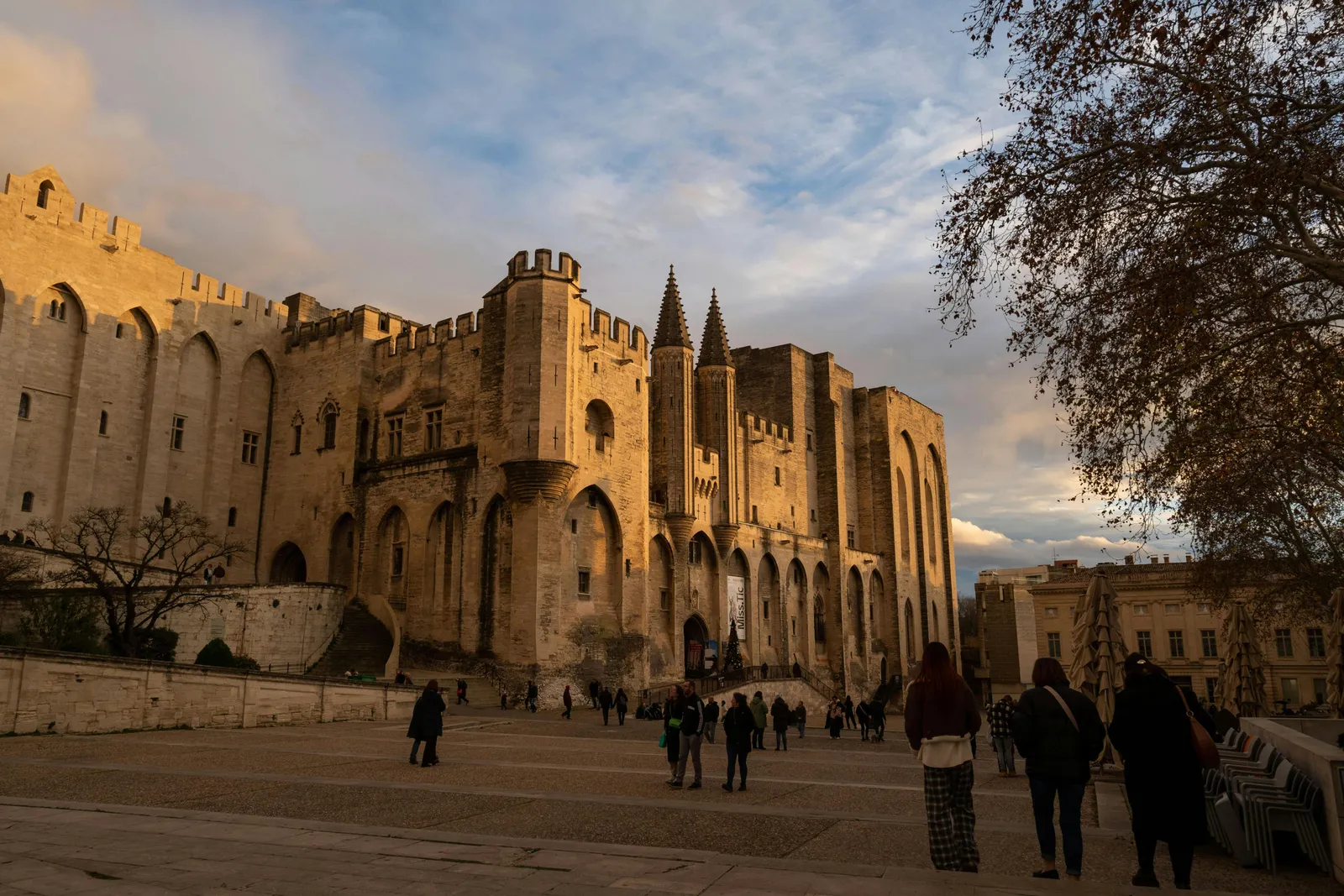
Para fotografía exterior, la Place du Palais frente a la fachada occidental recibe luz directa desde media mañana hasta primeras horas de la tarde. El parque Rocher des Doms, el promontorio rocoso inmediatamente al norte del palacio, ofrece una vista panorámica elevada que fotografía mejor a última hora de la tarde, cuando la luz envuelve las torres y alcanza el Pont d'Avignon. Desde mediados de noviembre hasta mediados de febrero, el sol nunca se eleva mucho sobre el horizonte, produciendo sombras alargadas y fotografías más suaves y atmosféricas incluso a mediodía. Mayo, septiembre y octubre combinan la mejor conjunción de luz nítida, cielos dramáticos y afluencia moderada para fotógrafos.
Preguntas frecuentes
¿Cuál es el mejor mes para visitar el Palais des Papes?
Mayo y septiembre ofrecen la mejor combinación de clima templado, luz prolongada y afluencia moderada. Ambos caen fuera del Festival d'Avignon y del pico de calor estival, y ambos coinciden con las condiciones más fotogénicas en la campiña provenzal circundante.
¿Merece la pena visitar el palacio durante el Festival d'Avignon?
Sí, pero solo como experiencia parcial. El circuito de visita funciona con normalidad durante todo el Festival, pero la Cour d'Honneur queda progresivamente restringida desde media tarde en adelante y no está disponible por las noches. Los horarios matinales son los menos afectados. Los viajeros cuyo objetivo principal sea el palacio como monumento deberían elegir mayo, junio o septiembre.
¿Cuándo se celebra exactamente el Festival d'Avignon?
Aproximadamente tres semanas entre principios y finales de julio cada año. Las fechas exactas las anuncia la organización del Festival en marzo o abril para ese verano. El programa IN es comisariado; el OFF fringe transcurre simultáneamente por toda la ciudad amurallada.
¿Es el viento mistral un problema real para los visitantes?
Es un factor real, especialmente entre octubre y abril. El mistral sopla aproximadamente un día de cada tres, sostenido entre cincuenta y noventa kilómetros por hora, y puede reducir considerablemente la temperatura percibida en los patios abiertos. El interior del palacio no se ve afectado. Una capa cortavientos es recomendable fuera del verano.
¿Son realmente las peores horas para visitarlo las de mediodía en verano?
Desde el punto de vista del confort, sí. La cola, el control de seguridad y las primeras secciones del patio están expuestos al sol directo, y las tardes de verano en Aviñón superan regularmente los treinta y cinco grados centígrados. El interior del palacio permanece fresco en todo momento, pero el acceso es la parte más exigente. Los horarios de mañana o de última hora de la tarde resultan más confortables.
¿Cierra el Palais des Papes algún día completo?
Únicamente el día de Navidad y el día de Año Nuevo. Fuera de esas fechas, el palacio abre a diario durante todo el año, con ajustes estacionales de horario. Le recomendamos consultar siempre el calendario actualizado del operador antes de desplazarse.
¿Qué días de la semana son los más tranquilos?
Miércoles y jueves son los días más tranquilos, especialmente fuera de las vacaciones escolares francesas. El sábado es el día de mayor afluencia del año, seguido muy de cerca por el martes debido a la programación de cruceros y autocares turísticos. El domingo presenta una afluencia moderada.
¿Cierra el palacio alguna sala por labores de conservación en temporada baja?
Ocasionalmente se producen cierres parciales de salas específicas por trabajos de conservación, que se anuncian con antelación en el sitio web del operador. Las salas principales —Grand Tinel, Consistory, Chambre du Cerf y las capillas de Saint-Jean y Saint-Martial— rara vez se ven afectadas durante más de unos pocos días seguidos.
¿Cuánto tiempo debo prever para la visita?
Entre dos y tres horas a ritmo pausado con el HistoPad cubren el circuito completo de aproximadamente veinticinco salas repartidas entre ambos palacios. Los visitantes que incluyan el mirador de la terraza y los Pontifical Gardens deberán prever cerca de tres horas y media.
¿Cuáles son los mejores meses para la fotografía?
Mayo, septiembre y octubre combinan una luz nítida con los cielos dramáticos de la Provenza. Julio ofrece condiciones de cielo azul despejado si prefiere composiciones sin nubes, aunque el montaje del Festival en el Cour d'Honneur supone una limitación. Noviembre produce una luz de sombras alargadas excelente para la fachada occidental.